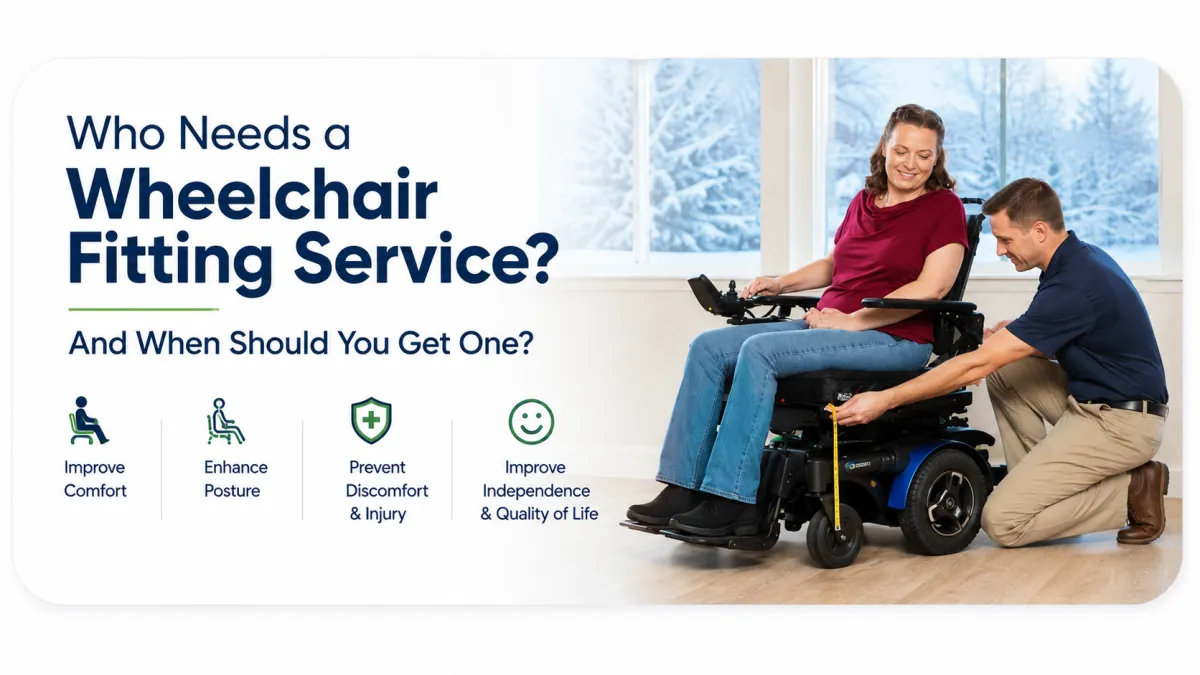
Who Needs Wheelchair Fitting Service and When Guide
By Clinical Marketing Team, MES Mobility
If you need mobility assistance because of a health condition, a wheelchair fitting tailors the chair to you. A proper fit boosts comfort and function. Knowing who should get a fitting and when to book one can improve mobility and quality of life. This article covers the criteria for a fitting, why fit matters, health risks of poor fit, the custom fitting process, and the benefits of a correct fit.
Who Needs Wheelchair Fitting Services:
You should consider a fitting if you have significant disabilities, a progressive condition, or need help with daily mobility. A tailored wheelchair meets your body and lifestyle. Proper fitting improves mobility, supports posture, and helps prevent problems caused by a poor fit.
When to Obtain These Services:
Get a fitting when a physician prescribes it, after a full evaluation, or when it's medically necessary. Book a fitting whenever you notice changes in mobility or health. Early intervention usually leads to better outcomes and greater comfort.
Significance of Proper Fitting:
A correct wheelchair fit raises comfort, supports posture, and reduces the risk of pressure sores. A well-fitted chair also improves control and stability, which helps preserve independence. Proper fitting has a direct effect on quality of life.
Experts stress that a correct wheelchair fit is essential for function, posture, and skin protection.
Proper Wheelchair Fit: Function, Posture, and Skin Integrity
Multiple authors have addressed wheelchair seating, the value of evaluation, and the consequences of poor posture and poor fit.
"Measure it: Proper wheelchair fit is key to ensuring function while protecting skin integrity," S Sprigle, 2014
Health Implications of Inadequate Fitting:
A poor fit can cause bad posture, pressure injuries, and reduced functional independence. It often leads to pain and discomfort that limit mobility. Knowing these health risks makes clear why professional fitting matters.
Research shows improper fitting can severely affect a user's mobility and overall quality of life.
Impact of Improper Wheelchair Fitting on Mobility & Quality of Life
Proper wheelchair fitting, and correct education of medical staff, patients, and families/caregivers, can raise awareness of risks, limitations, and the effects of incorrect positioning. Basic knowledge and experience may reduce those consequences and lead to a shorter, more effective therapeutic process. This paper discusses problems from improper fitting via a case study, explores links to reduced independence, mobility, and life quality, and proposes solutions and directions for further research.
Harmful results of improperly fitted wheelchair – case study, E Mikołajewska, 2017
What Are the Key Criteria for Needing a Wheelchair Fitting Service?
Key criteria include specific symptoms or conditions, clear mobility limits, and ongoing postural or comfort problems that affect daily life.
Which Symptoms and Conditions Indicate the Need for a Wheelchair Fitting?
People with progressive neurological conditions, severe arthritis, or spinal cord injuries often require wheelchair fitting services. These conditions can alter mobility and usually need a customised approach so the chair fits the user's needs.
How Does a Disability Seating Evaluation Determine Fitting Needs?
A disability seating evaluation uses a clinical interview, physical assessment, and environmental review. This lets clinicians identify your needs and recommend appropriate wheelchair options.
When Is the Best Time to Get a Wheelchair Assessment?
Schedule an assessment when mobility first becomes an issue, when your health changes, or before significant life events. Early assessment improves mobility outcomes and helps prevent complications.
What Are the Common Triggers for Scheduling a Wheelchair Fitting?
Triggers include new or worsening medical conditions, declining mobility, or changes to your home or work environment. Spotting these triggers helps you get timely support.
How Early Assessment Improves Mobility Outcomes and Prevents Pressure Sores?
Early assessment lets you get a custom fit that supports posture and, with pressure mapping, helps prevent pressure sores. This proactive step enhances comfort and mobility.
What Is Involved in the Custom Wheelchair Fitting Process?
A custom fitting includes a clinical interview, a physical assessment, and final adjustments. This thorough process ensures the wheelchair is matched to the user's specific needs.
How Are Mobility Assessments and Seating Evaluations Conducted?
Assessments follow steps: interview, physical exam, and environmental review. These steps are essential to determine the right wheelchair fit.
What Role Does Wheelchair Prescription Guidance Play in Custom Fittings?
Prescription guidance confirms medical necessity and specifies custom features that match your abilities. Clear guidance streamlines the fitting and improves outcomes.
What Are the Benefits of Proper Wheelchair Fitting?
A proper wheelchair fit delivers better comfort, greater mobility, and improved health outcomes.
How Does Proper Fitting Prevent Pressure Sores and Improve Comfort?
A correct fit evens pressure, optimises posture, and can use dynamic positioning to reduce pressure sore risk. Together, these features increase comfort and mobility.
What Advantages Do Custom Wheelchair Fittings Offer Over Standard Options?
Custom fittings provide a personalised fit, better postural support, and adaptability to medical needs. These benefits make them preferable to standard options for users with specific requirements.
These benefits reinforce why professional fitting is important to optimize mobility and health outcomes.
For more information about MES Mobility and their commitment to quality mobility solutions, visit their website.
Frequently Asked Questions
What should I expect during a wheelchair fitting appointment?
Expect a full evaluation: interview, physical assessment, and an environmental review. The clinician will check your mobility, posture, and any medical issues. They'll take precise measurements and may use pressure mapping. The fitting usually includes adjustments to improve comfort and function so your chair supports independence.
How often should I have my wheelchair fitted or reassessed?
Have a fitting or reassessment at least once a year, or whenever your health, mobility, or physical condition changes. If you experience pain, discomfort, or pressure sores, seek reassessment sooner. Regular checks keep your wheelchair supportive and help prevent complications.
Can I use my wheelchair without a fitting service?
You can use a wheelchair without a fitting, but it's not recommended. An improper fit can cause pain, poor posture, pressure sores, and reduced mobility. A professional fitting tailors the chair to you and improves comfort and long-term health.
What types of wheelchairs can be fitted through these services?
Fitting services cover manual wheelchairs, power wheelchairs, and specialised seating systems. Each type can be customised to medical needs and lifestyle. A professional assessment will help you choose the best option for your situation.
Are wheelchair fitting services covered by insurance?
Many insurance plans, including Medicare and Medicaid, may cover fittings when they're medically necessary. Coverage varies by policy and condition. Check with your provider about coverage and required documentation, such as a physician's prescription.
What should I do if I experience discomfort after a fitting?
If you have discomfort after a fitting, contact the fitting service or your healthcare provider right away. The chair may need adjustments. A follow-up appointment can resolve issues and prevent further problems.
Conclusion
A professional wheelchair fitting improves mobility and comfort by matching the chair to your needs. Proper fit supports posture, prevents complications, and enhances quality of life. Prioritise a professional fitting to ensure your wheelchair delivers the right support and function. Take the next step and schedule your wheelchair fitting service.
